

Why Bodyweight Training Works
Bodyweight training is one of the most effective and accessible ways to build strength, improve mobility, and enhance overall fitness. Whether you are a complete beginner or an experienced lifter, bodyweight exercises can be scaled to match your fitness level through simple progression techniques.
Research published in the Journal of Strength and Conditioning Research shows that bodyweight exercises can produce comparable strength gains to traditional weight training when progressive overload principles are applied consistently. The key is understanding how to make each movement more challenging over time.
Benefits of Bodyweight Training
No equipment required — train anywhere, anytime
Improves functional strength — movements mimic real-world activities
Enhances mobility and flexibility — full range of motion in every rep
Reduces injury risk — lower joint stress compared to heavy external loads
Builds core stability — every bodyweight movement engages the core
10 Essential Bodyweight Exercises
1. Push-Ups
The push-up is the gold standard for upper body pushing strength. Keep your core tight, elbows at a 45-degree angle, and lower your chest until it nearly touches the ground. Aim for 3 sets of 10-15 reps.
Progression: Start with knee push-ups, advance to standard, then try diamond push-ups or decline push-ups with feet elevated.
2. Bodyweight Squats
Squats build lower body strength and improve hip mobility. Stand with feet shoulder-width apart, keep your chest up, and lower until your thighs are parallel to the ground. Drive through your heels to return to standing. Complete 3 sets of 15-20 reps.
Progression: Advance to pistol squats, jump squats, or Bulgarian split squats once you can do 20+ reps with perfect form.
3. Lunges
Lunges target each leg independently, helping correct muscle imbalances between sides. Step forward with one leg, lower your back knee toward the ground, and push back to start. Perform 3 sets of 10-12 reps per leg.
Progression: Add walking lunges, reverse lunges, or jumping lunges for increased difficulty.
4. Planks
The plank is the most effective core stabilization exercise. Maintain a straight line from head to heels, engage your glutes, and breathe steadily. Hold for 30-60 seconds for 3 sets.
Progression: Try side planks, plank with shoulder taps, or extend your hold time beyond 2 minutes.
5. Glute Bridges
Glute bridges strengthen the posterior chain and help counteract the negative effects of prolonged sitting. Lie on your back with knees bent, squeeze your glutes to lift your hips, and hold at the top for 2 seconds. Do 3 sets of 15 reps.
Progression: Progress to single-leg glute bridges or elevate your feet for a greater range of motion.
6. Burpees
Burpees combine strength and cardio for a full-body conditioning exercise. From standing, drop into a squat, kick your feet back into a push-up position, return to squat, and jump up. Aim for 3 sets of 8-12 reps.
Progression: Add a push-up at the bottom or a tuck jump at the top for extra intensity.
7. Mountain Climbers
Mountain climbers build core endurance and cardiovascular fitness simultaneously. Start in a plank position, drive one knee toward your chest, then quickly switch legs. Keep your hips low and maintain a steady rhythm. Perform 3 sets of 30-45 seconds.
Progression: Increase speed or try cross-body mountain climbers targeting the obliques.
8. Superman Holds
This exercise strengthens the lower back and improves posture. Lie face down with arms extended overhead, simultaneously lift your arms, chest, and legs off the ground, and hold for 2-3 seconds. Complete 3 sets of 10-12 reps.
Progression: Increase hold duration or add light arm and leg movements during the hold.
9. Tricep Dips
Using a sturdy chair or low table, place your hands on the edge behind you. Lower your body by bending your elbows to about 90 degrees, then push back up. Keep your back close to the chair throughout. Perform 3 sets of 8-12 reps.
Progression: Straighten your legs for more resistance or elevate your feet on another chair.
10. Bicycle Crunches
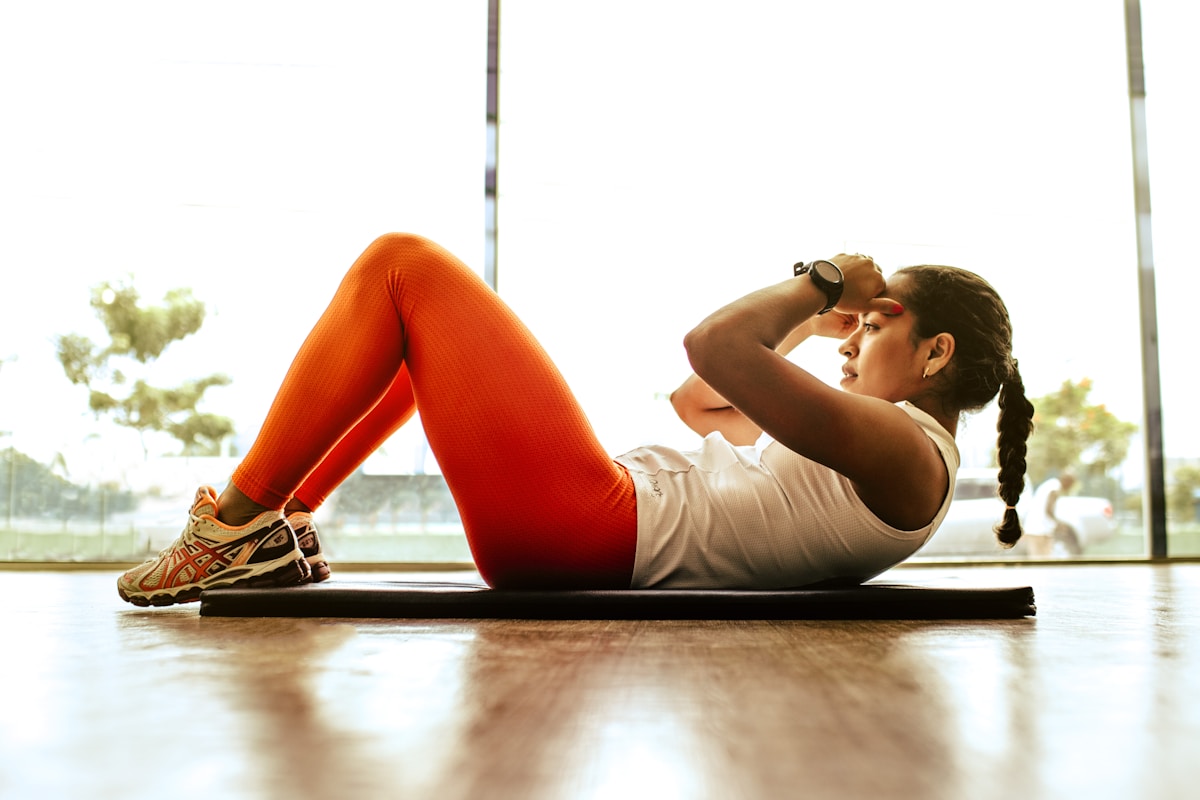
Bicycle crunches target the rectus abdominis and obliques effectively. Lie on your back with hands behind your head, bring opposite elbow to knee while extending the other leg, and alternate sides in a controlled pedaling motion. Do 3 sets of 15-20 reps per side.
Progression: Slow down the movement to increase time under tension or hold the crunch at peak contraction.
Sample Full-Body Bodyweight Workout
Here is a balanced routine you can complete in 25-30 minutes, 3-4 times per week:
Push-Ups — 3 sets of 10-15
Bodyweight Squats — 3 sets of 15-20
Planks — 3 sets of 45 seconds
Lunges — 3 sets of 10 per leg
Glute Bridges — 3 sets of 15
Mountain Climbers — 3 sets of 30 seconds
Superman Holds — 3 sets of 10
Bicycle Crunches — 3 sets of 15 per side
Rest 60 seconds between sets and 90 seconds between exercises. As you get stronger, increase reps, reduce rest time, or add the progression variations described above.
Key Principles for Continued Progress
To keep seeing results week after week, apply these principles consistently:
Progressive Overload: Gradually increase reps, sets, or difficulty every 1-2 weeks.
Consistency Over Intensity: Training 4 times per week at moderate intensity produces better long-term results than sporadic intense sessions.
Full Range of Motion: Perform every rep through the complete movement path — partial reps limit strength development.
Mind-Muscle Connection: Focus on the target muscle during each exercise rather than rushing through reps.
For more structured workout plans and exercise guides, browse the workout plans and exercise library on GymFaster.